




Over 60 percent of healthcare workers in the United States of America are neither doctors nor nurses. This category of allied health roles includes positions such as dental assistants, dental hygienists, and physiotherapists, who provide diagnostic, evaluative, and preventive medical support in clinical environments.
Some professionals at the beginning of their medical careers leverage their experience as dental assistants when transitioning into dentistry. Besides, the position itself is one of the fastest-growing roles in the US, with highly fulfilling, flexible, and dynamic routines.
In this guide, we’ll rehearse the roles of dental assistants and provide a step-by-step guide on how to become a dental assistant.
What’s It Like to Work as a Dental Assistant?

On a typical working day, a dental assistant finds themselves in a potential range of benefits. However, as their name suggests, this category of professionals generally aids dentists during dental consultations and procedures.
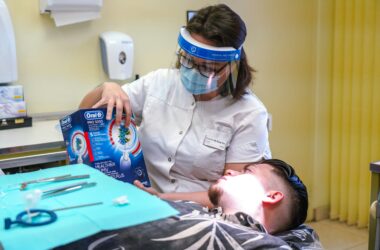
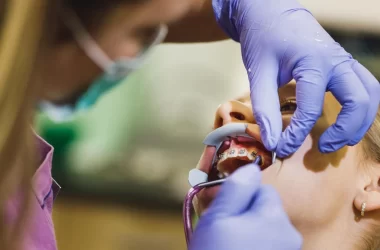
A dental assistant’s role can include greeting/seating patients, preparing and sterilizing tools, equipment, and rooms for treatment, taking dental radiographs, assisting dentists with procedures, and offering patients post-treatment care guidelines.
Often, dental assistants work within the limits of general dental practice. However, a smaller category of others work in a specialty practice that could offer them the chance to perform more specific and challenging duties.
Suppose you’re considering, “How to become a dental assistant in the US.” Chances are, you’re wondering what the future looks like for the profession. Thankfully, the US Bureau of Labor Statistics in 2024 projected an 8 percent growth rate between 2023 and 2033 annually, about 4 percent higher than the national average.
Moreover, dental assistants have numerous growth opportunities and can choose future careers in dental hygiene or specialized aspects of dentistry, such as endodontics, orthodontics, oral surgery, and pediatric dentistry.
Various research works have linked this growth to additional discoveries in medical and dental science. Additional some research have reported an apparent correlation between oral health and general health. Medical professionals have expanded routine dental care to include screening for diabetes, cancer, and cardiovascular disorders.
Thanks to these scientific discoveries and diagnostic practices, dental healthcare providers can spot the leading causes of decreased immune function and other more severe health conditions.
Add these discoveries to the increasingly aging US population, and it’s easy to see why the BLS projects a growing demand for dental assistants.
Read also: How Long Does a Dental Cleaning Take?
How to Become a Dental Assistant in 2025?
While we’ll use the United States as a template for providing a specific pathway on how to become a dental assistant, various world regions have similar requirements for onboarding new dental assistants.
There are three main routes to becoming a dental assistant, and the educational and professional requirements for these roles depend on state requirements. Some states require that assistants get certified by an accredited educational program and pass a national examination before working in a hospital environment.
Other states replace formal training requirements with on-the-job education, permitting incoming dental assistants to master relevant skills in a clinical setting. Often, military training experience as a dental assistant also serves as a valid professional experience.
Since certification and training requirements can vary from one state to another, prospective dental assistants want to check with their state for more specific requirements.
After completing the required educational programs, completing designated on-the-job training approved by a dentist, or gaining equivalent experience through military service, dental assistants can take the registered dental assistant (RDA) examination and get certified as an RDA.
Subsequently, interested dental assistants can pursue professional certification from the Commission on Dental Accreditation (CODA).
Read also: Here’s Everything to Know About Dental Bone Grafting: Is It Right for You?
Step-by-Step Procedure on How to Become a Dental Assistant in the US
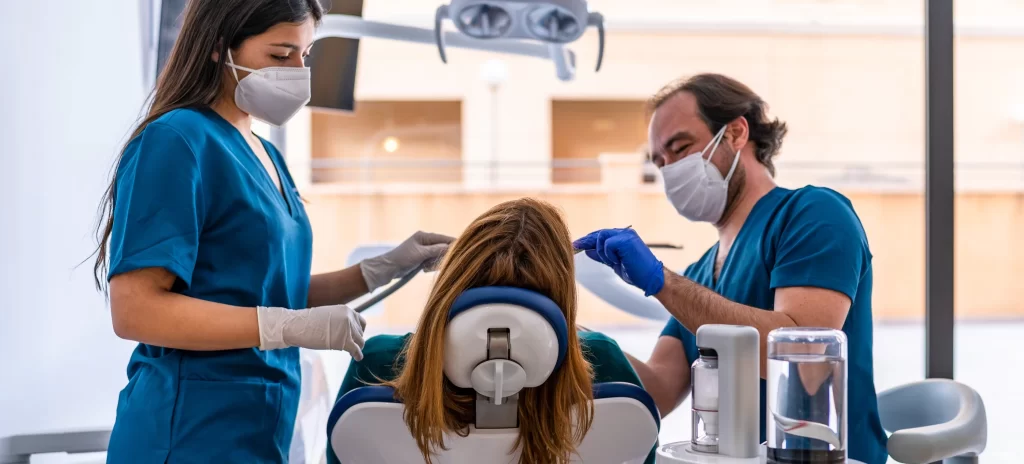
The following is a step-by-step guide on how to become a dental assistant in the United States. Each route could mirror pathways in other countries or regions, but they provide unique ways to join this profession if you want to work in the US.
Step 1: Earn a high school diploma or a four-year GED
High school students seeking to pursue a career in dental assisting must first complete a high school diploma or a general equivalency diploma (GED). If you’re in this category, consider taking as many math and science courses as possible ahead of college-level coursework.
Step 2: Enroll in a dental assisting program or equivalent professional route
There are three sub-pathways in this step with different time requirements. They’re the
- Work experience eligibility route (36 months)
- Military eligibility route (16 months); and the
- Education eligibility route (12 months)
To apply for the RDA exam certification via the work experience eligibility route, applicants need a minimum of three years or 5,250 hours of dental assistant training supervised and approved by a licensed dentist. They must also provide a recommendation letter from a current or former employer to qualify for the certification examination.
Elsewhere, people who have completed a military dental assisting training program and have at least 12 months of work experience can apply for the RDA exam. If the tendered training and work experience occurred four or more years before the candidate applied for the RDA exam, the applicant must provide at least three years of work experience alongside their application.
Qualified training programs include clinical procedures, dental radiography, dental sciences, and office skills.
Lastly, prospective dental assistants can complete degree programs via face-to-face learning, hybrid, or fully online training in tertiary schools. These programs, accredited by the CODA, typically take 12 months to complete.
Step 3: Apply for the RDA
After completing the dental assisting program via any of the above routes, the next step involves taking the RDA examination through the American Medical Technologist Association (AMT). This certification examination helps to assess applicants on their professional knowledge and skill-based competence before taking a dental assistant role.
Students usually have to wait for a maximum of 21 days to receive confirmation on an accepted/declined application before they can register to take the assessment.
For more information, kindly visit the AMT Candidate Handbook for additional details on the application requirements for the RDA examination.
Step 4: Prepare for RDA exams
The RDA test will largely cover content learned via dental assisting education programs or professional experiences. However, it is vital to prepare for the examination, as with any exam, to familiarize yourself with the test format, content, and time requirements.
Various online media contain approved and free RDA resources based on exam content and reference information.
Step 5: Register and pass the RDA certification examination
After applying to take the RDA exam, approved candidates will receive an email confirming their application to take the approved examination. Applicants who receive a confirmation should visit the AMT website to print an Authorization to Test letter, which will grant them registration access for the RDA test at a Pearson Vue test center.
Step 6: Maintain RDA certification
Candidates who pass the RDA examination get an invitation to become active certified members of the AMT. AMT members can renew their membership annually, while members must comply with the certification continuation program every three years.
By belonging to this professional organization, individuals can demonstrate to future employers that they adhere to the AMT’s standards of practice. Besides, the organization ensures that members participate in career services, leadership roles, and continuing learning.
Read also: What is a Dental Flipper? Know This Before Getting One
Conclusion
The first phase of becoming a dental assistant involves gaining specialized education and professional experience. However, dental assistants should subscribe to continuing education and benefit from professional societies to remain on the cutting edge of best practices, ethical standards, and governmental regulations.
If you’re considering this role, refer to the official websites of the corresponding pathways to becoming a dental assistant in your state or country for specific admission requirements.