

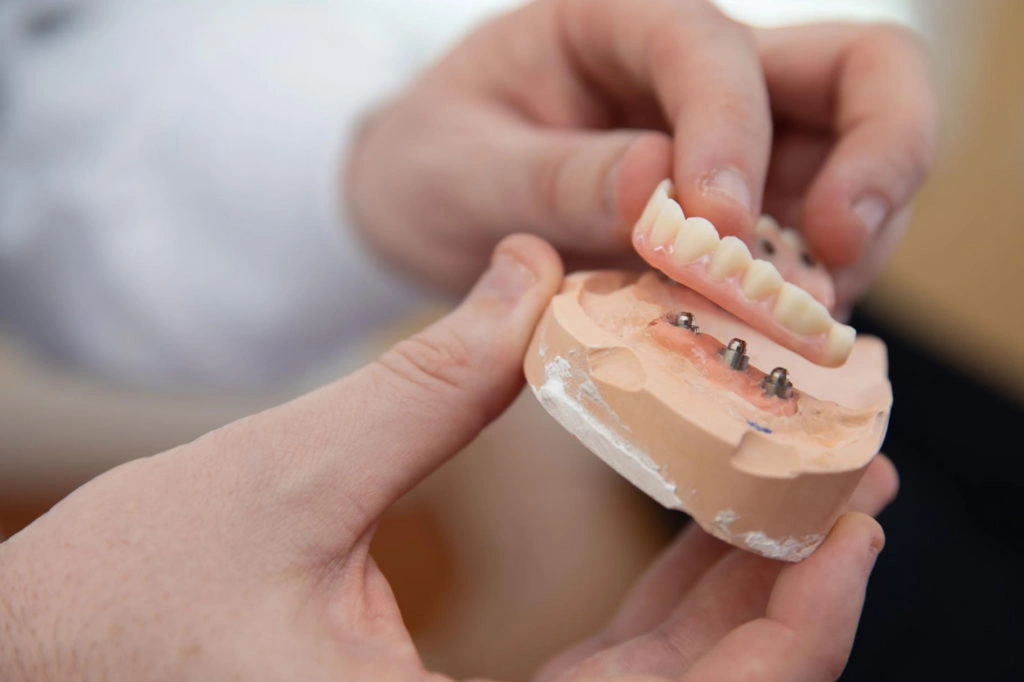

For individuals who have experienced the loss of a full arch of teeth, the thought of regaining a complete and fully functional denture can be overwhelming. Traditional dentures are a likely solution, but they slip, are uncomfortable, and need to be glued in place.
This is where full-arch dental implants take the shine. They are a stable and permanent alternative to traditional dentures.
Dental implant patients are increasingly choosing full-arch dental implants over their traditional counterparts.
This article takes a look at the benefits, potential drawbacks, costs, and the typical steps involved in having the procedure done.
Read also: 5 Cheap, Best Alternatives to Dental Implants
Benefits Of Full Arch Dental Implants
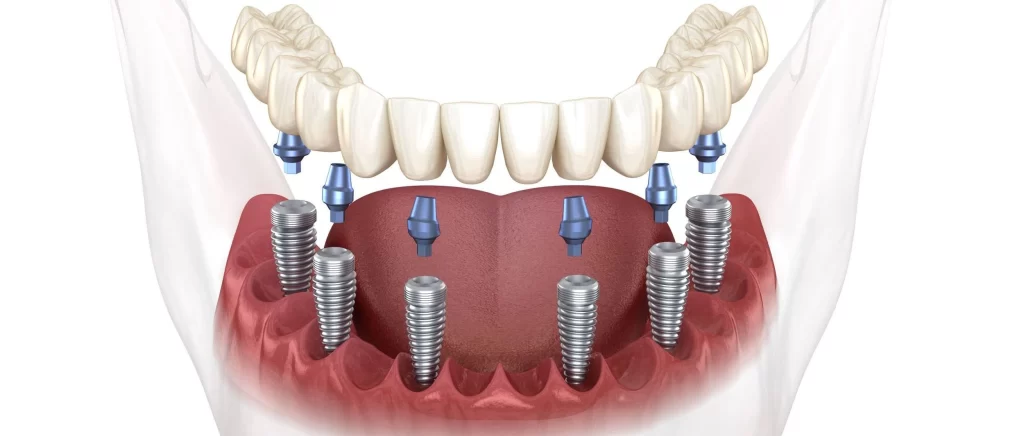
Some of the benefits of full-arch dental implants include
- Stability and functionality
Full arch dental implants are fused securely into the jawbone, making them stable. This is in contrast to traditional, removable dentures, which shift or click and are uncomfortable. With full arch dental implants, the recipient can eat, speak clearly, and laugh freely.
- The preservation of jawbone health
The area of the jawbone surrounding missing teeth usually resorbs or shrinks due to a lack of stimulation from the missing tooth roots.
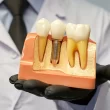
Dental implants solve this problem by acting as replacement tooth roots and stimulating the jawbone as oral functions like chewing are carried out. Thus, the facial structure of the recipient is preserved.
- Their natural appearance and feel
Modern prosthetic arches are fabricated so they blend seamlessly with the natural facial features of the recipient. They are more natural-looking and function just like natural teeth compared to traditional, removable dentures.
- Their long-term durability
Full arch dental implants stay in place and function for several years, maybe even for a lifetime. Thus, they are a durable and long-lasting solution to the loss of several teeth, compared to their traditional counterparts, which require replacing or readjusting every few years.
- Improved comfort and oral hygiene
Dental implants and the prosthetic arches attached to them do not rub or irritate the gums as traditional, removable dentures do. Also, they are easier to clean through regular brushing and flossing, just as natural teeth would.
- Improved confidence and self-confidence
Full arch dental implants restore the recipient’s ability to eat, speak freely, and smile without being self-conscious. This contributes to the recipient’s self-confidence and overall psychological well-being.
Potential Drawbacks of Full Arch Dental Implants
Although full-arch dental implants are beneficial, they also have their drawbacks:
- The higher upfront cost
Full-arch dental implants require a substantial upfront investment compared to traditional dentures. The high price tag results from the combination of the complex nature of the procedure, the cost of the materials the implants are fabricated from, the surgical expertise required, and customization.
That notwithstanding, their stability and durability make them more cost-effective in the long run.
- The inherent risk in the surgery
Oral surgery has to be performed to place dental implants. While oral surgeries are considered safe, there are risks—such as infection, bleeding, nerve damage, or even implant failure—inherent in the procedure.
- They require a substantial time investment.
The full arch dental implant treatment takes time. Several months will elapse from the initial consultation to the final restoration, due mainly to the time required for osseointegration—the fusion of the implant into the jawbone.
- The possibility of the need for a bone graft
Bone grafting, which adds a layer of complexity and comes with its own set of risks, may be required before an implant. This is the case where it is determined that there has been a significant bone loss. The bone graft ensures there is sufficient bone density to support the implants. A bone graft adds to the time and cost of the implant treatment.
- The adjustment period
Most implant patients find it initially difficult adjusting and getting used to their new teeth, especially in the areas of speaking and chewing.
Read also: Full Mouth Dental Implants Cost With Insurance in 2024
Cost of Full Arch Dental Implants
The cost of a full arch dental implant is influenced by several factors:
- The number of implants required
The term “full arch” implies that a complete set of upper or lower prosthetic teeth is being implanted. However, the number of implants used to provide support to the prosthetic arch could vary from 4 to 6, and sometimes even 8. The more implants used for support, the higher the cost of the procedure is.
- The type of material used
Prosthetic teeth are manufactured from a variety of materials with varying durability and cost. The quality and cost of the materials used for making the prosthetic teeth, examples of which are acrylic and zirconia, ultimately impact the final bill for the procedure.
- The pre-op required
There will be additional costs if it is determined that there is a need for any bone grafting, tooth extractions, or even extensive diagnostic imaging.
- The geographical location of the practice and the dentist’s expertise
The location of the practice as well as the expertise of the dental surgeon handling the procedure are important cost factors when having full-arch dental implants.
- The type of anesthesia required
How involved the sedation needed for the procedure is also weighed in on the final bill. Local or topical anesthesia will cost less compared to general anesthesia, which would require the presence of an anesthesiologist during the procedure.
Generally, the cost for the implant of a single arch of prosthetic teeth is between $15,000 and $30,000. A full mouth implant (upper and lower arches) will set you back upwards of $60,000. It’s best practice to have a detailed discussion with your dental surgeon to ascertain what your exact bill will come to.
Remember to use your dental insurance if you have one in place, and also consider financing options that might be available.
Read also: What is Cantilever Bridge Dental: Here’s All You Must Know in 2025
Procedures Involved in Full Arch Dental Implants
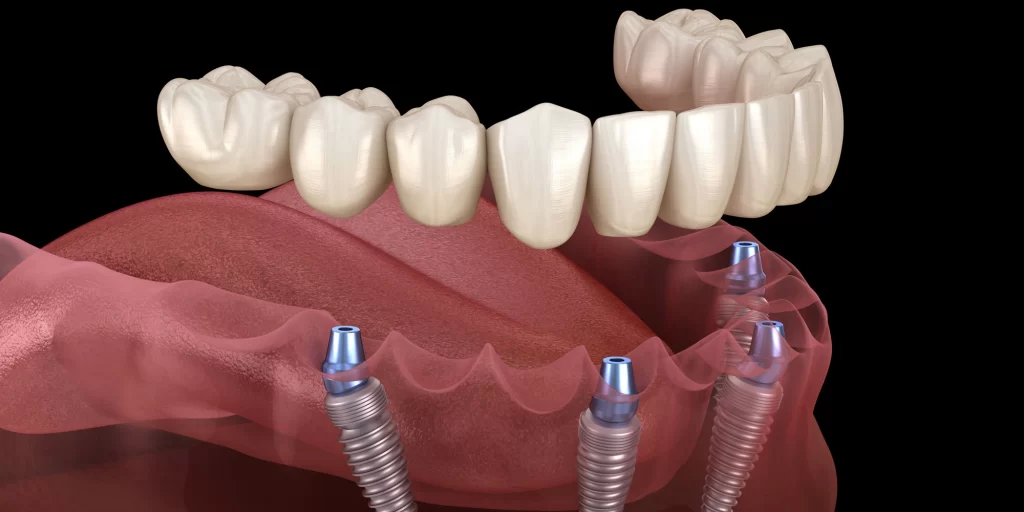
The full arch dental implant unfolds in several distinct steps:
- The initial consultation
This important first step is for planning purposes, and it entails a comprehensive dental examination. Some diagnostic imaging of the denture, like X-rays and 3D CBCT scans, is in order here. The imaging will enable the dental surgeon to get realistic models of the teeth and jaw that will be operated on.
From the diagnostics, the dental surgeon will assess the patient’s overall oral health and bone density and determine whether or not to go forward with the proposed implant. The dental surgeon then creates a treatment plan customized for the patient.
- Preliminary procedures
There are preparatory steps the dental surgeon will carry out, depending on the unique characteristics of the case under consideration. For example, if the diagnostics reveal insufficient bone density, a bone graft to the deficient area is indicated. Also, any unhealthy teeth remaining in the arch to be treated may be extracted.
- The implant surgery
This stage is when the actual surgery takes place. The dental surgeon will begin by placing titanium implant posts in strategic locations in the jawbone, after which the gums are sutured. Typically, the procedure is done under local anesthesia or sedation.
- The healing period
After the implants have been placed, they are left for a period of time, usually several months, to fuse into place and heal.
During this period, there is a fusion of the jawbone and the titanium implants in a process known as osseointegration. The result is a strong and stable base on which the prosthetic teeth can be placed. It’s not unusual for a temporary arch to be in place during this healing period.
- The placement of the abutment
In relevant cases, an abutment, a small connector piece, might be applied to the implant after the osseointegration period has elapsed. The process itself is a minor surgery. The abutment connects the implant to the permanent prosthetic arch that will be mounted.
- Placement of the final prosthetic arch
At this stage, the implants are properly fused into the jawbone, and the abutments are in place. Some imaging of the jawbone is taken to fabricate customized, full-arch prosthetic teeth. The customized prosthetic teeth arch is then securely fixed onto the implants using the abutments.
This final step completes the full arch dental implant procedure.
Conclusion
Full arch dental implants are a transformative solution for those seeking a long-lasting, natural-looking, and functional replacement for a missing arch of teeth. The procedure is costly and time-intensive, but the long-term benefits more than make up for it.