

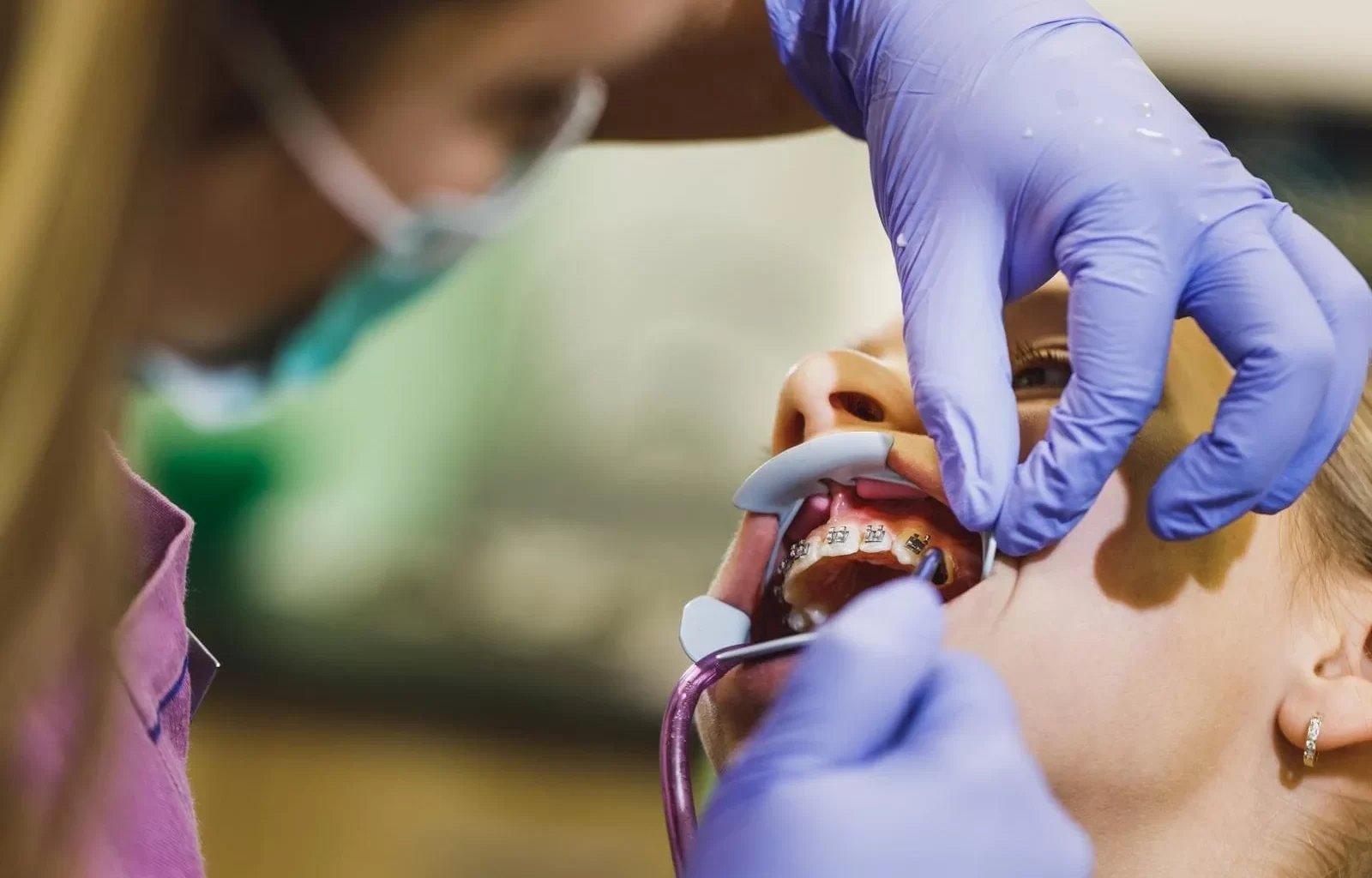

Malocclusion—the misalignment of the teeth and jaw—is a dental issue that prompts a visit to the orthodontist, the specialist dentist trained to treat the condition.
Orthodontists correct the misalignment of the teeth and the jaw primarily by setting braces—the network of brackets and wires—on the teeth. Installed precisely, braces will diligently straighten teeth over a set period.
The dental headgear is another appliance that orthodontists use to treat malocclusion. They resort to it in more complex cases where braces might not achieve optimal orthodontic outcomes. The dental headgear, with its daunting appearance, is often misunderstood.
This guide aims to provide clarity on the various types of dental headgear, their associated costs, and their diverse applications in orthodontic treatment.
Read also: What is Impla Dental All About?
What is Dental Headgear, and Why is it Used?
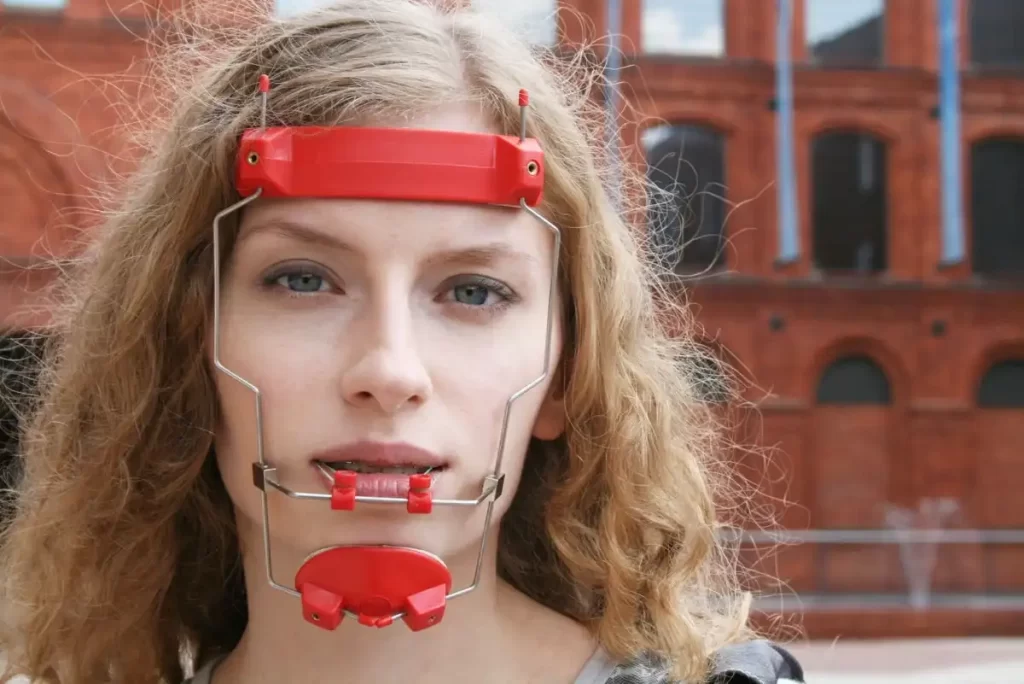
A dental headgear is an orthodontic appliance worn outside the mouth. It is essentially a strap attached to the back of the head and connected to a metal wire in front of the face. It functions by exerting forces on the teeth and jaws. It inhibits the growth of the upper jaw while holding the back teeth in place. The ensemble then moves the front teeth backward for proper alignment with the back teeth.
Headgears are worn in the evenings and at night so they don’t get in the way of everyday activities.
While braces work by moving individual teeth, the dental headgear applies gentle, consistent pressure to specific teeth and the jaws to guide their position, growth, and movement. Dental headgears are often used together with braces and act as powerful allies in achieving complex bite corrections and improving facial aesthetics.
Thus, dental headgear primarily creates space and corrects significant overbites or underbites, ensuring that the teeth and the jaws align properly.
Types of Dental Headgear
Different types of dental headgear exist, and each type addresses a specific variant of malocclusion:
- The Cervical-Pull Headgear
This headgear is made up of a U-shaped wire that is attached to bands installed on the molars and extends around the back of the neck. It is secured in place by a neck strap.
The cervical-pull headgear is used to treat overbites, also known as Class II malocclusions. It pulls back on the upper molars and slows the growth of the upper jaw while moving the upper teeth backward to reduce their protrusion. It’s best used for growing patients where it is still possible to modify the jaws.
- The High-Pull Headgear
The high-pull headgear has a strap that goes over the top of the wearer’s head while attaching to bands on the upper molars. It exerts an upward and backward force on the molars.
High-pull headgears are used to treat “open bites,” which are situations where the front teeth don’t meet. They control the vertical growth of the upper jaw by pushing up on the molars. Thus, a reduction in the vertical dimension of the bite is achieved.
- The Reverse-Pull Headgear
Also known as the facemask, the reverse-pull headgear features pads that sit on the wearer’s forehead and chin, connected by a vertical bar.
Some elastics extend from the facemask to expanders in the mouth. The ensemble exerts a forward and outward force, thus encouraging the growth of the upper jaw as well as the forward movement of the upper teeth.
The reverse-pull headgear treats underbites or Class III malocclusions and is indicated for young, growing children whose facial bones are not yet mature.
- The Combination Headgear
The combination headgear has design elements of both the cervical and high-pull headgears. For example, it has a strap that goes around both the neck and the top of the wearer’s head.
Orthodontists use a combination of headgear to achieve the backward and upward movement of the wearer’s molars in tandem. The versatility of the combination headgear is useful for treating more complex cases of overbites or Class II malocclusions.
Read also: 5 Cheap, Best Alternatives to Dental Implants
The Cost of Dental Headgear
Orthodontists bill dental headgear as part of the overall orthodontic treatment plan. What they cost depends on several factors:
- How complex the malocclusion is
In severe cases of malocclusion, the fabrication of customized headgear, as well as its extended use, is implied. These may lead to higher costs being charged to the patient.
- The type of headgear being installed
The different types of headgear require differing levels of expertise to install and manage them. This also factors into the overall treatment price.
- Geographical location
Orthodontic fees differ from one region or city to another. For example, malocclusion treatment costs will be higher in metropolitan areas when compared to those in rural areas.
- The attending orthodontist’s expertise and track record.
Board-certified orthodontists with several years of experience and proven successful outcomes will charge more for their services.
As stated earlier, the cost of the dental headgear is bundled into the total cost of the orthodontic treatment; it is never billed alone. Generally, orthodontic treatment can cost as much as US$10,000 or more, depending on the duration and complexity of treatment.
The initial consultation with the orthodontist is important, as he or she will propose a comprehensive treatment plan and its associated costs.
The Uses of Dental Headgear

Dental headgears are not just used to “move teeth.” Their use revolves around correcting too much or too little jaw growth and the resulting misalignment of teeth.
Specifically, they are used to:
- Correct Overbites or Class II Malocclusions
Overbites result from the protrusion of the upper teeth. Cervical-pull and high-pull headgears apply corrective forces on the upper jaw and teeth to reduce the protrusion and achieve an aligned bite.
- Correct Underbites or Class III Malocclusions
Underbites result from the slow growth of the upper jaw in children. The reverse-pull headgear is useful in fast-tracking the growth of the upper jaw and thus forecloses the need for more invasive surgical intervention in later years.
- Create Space in the Dental Arch
In cases where the dental arch is crowded, dental headgears are used to create room for the eruption and growth of all permanent teeth. Dental headgears are used to move molars backward to achieve this.
- Anchor Teeth for Other Desired Movements
Orthodontists use dental headgear as anchors for moving other teeth. For example, the back teeth can be anchored in place using dental headgear while other teeth are moved forward or backward to align properly.
- Modify Jaw Growth
Dental headgears are also used to guide and modify the growth of the upper and lower jaws to achieve aligned dentition and improve facial appearance. This is especially true for young, still-growing patients.
- Intrude or Extrude Molars
Orthodontists use the high-pull headgear to push molars upwards (intrude) or pull them downwards (extrude) to correct a patient’s bite.
Read also: Full Arch Dental Implants: Benefits, Drawbacks, Cost, Procedures
Here’s What To Expect When Wearing Dental Headgear
Dental headgear is typically worn in the evenings and overnight during sleep. They require commitment and discipline to be effective.
- Some discomfort
There will be some initial discomfort and soreness as the mouth gets used to the forces being exerted by the device. This will go away within the first few days of use. Usually, the orthodontist will prescribe painkillers to help manage the discomfort.
- Distorted speech
Patients using dental headgear will experience slight changes in their speech in the first few days of using the appliance. This is because it changes the position and regulates the movement of the tongue and jaws, which are what humans use to produce sound.
Note that headgear must not be worn while eating to avoid damage to the appliance.
- The best outcomes result from consistent use.
Headgear has to be worn consistently to achieve a successful treatment of malocclusion. Usually, the orthodontist will determine how many hours in the day the patient will wear the headgear to achieve the desired results. Not keeping to the hours prescribed may extend the duration of treatment required or compromise it completely.
- Excellent hygiene is key.
It is important to have a proper oral hygiene routine while using dental headgear. Food particles will get trapped by the appliance’s bands and wires, and regularly brushing and flossing the teeth, as well as the careful cleaning of the appliance itself, will keep plaque from building up and contribute to the overall oral health of the wearer.
- Diligent care and maintenance
The dental headgear is a delicate appliance requiring careful handling. It is not a toy to play with. It should not be pulled on or carelessly placed where someone would mistakenly sit on it and damage it.
Orthodontists will provide wearers with specific cleaning and storage instructions, which wearers will do well to adhere to.
Read also: Dental Bone Graft Healing Stages and Timeline
The Future Of Orthodontics and Dental Headgears
Orthodontics, which thrives on the ability to move and reposition the teeth and the jaws, is being revolutionized with such advancements as clear aligners, self-ligating braces, and dental headgears. Specifically, dental headgear is a cherished tool, as it empowers orthodontists to modify jaw growth in complex cases of malocclusion.
Technological advances will bring with them further refinement of the headgear design, making it more comfortable and discreet.
Conclusion
Dental headgear are powerful and effective orthodontic devices that serve to correct discrepancies in bite, regulate jaw growth, and enable precise tooth movement.
The invaluable benefits they provide to the wearer include a harmonious bite, balanced facial aesthetics, and long-term durability. Understanding what types are available and the specific use cases for each type is critical so patients can make informed decisions on treatment for their malocclusions.