




A strong, healthy jawbone is important if you are considering having a dental implant anytime soon. However, you might have suffered jawbone deterioration from tooth loss, gum disease, trauma, or aging.
If this is your situation, then it is important that you have a dental bone graft procedure to restore the lost bone volume in your jaw. But what exactly goes on during a dental bone graft? And what is the dental bone graft cost you should expect?
This article will examine in detail what bone grafts are, the various cost elements that contribute to the final cost of your proposed dental bone graft, and explain the different types of grafts that are available.
Read also: Here’s Everything to Know About Dental Bone Grafting: Is It Right for You?
What Are Dental Bone Grafts and Why Are They Needed?
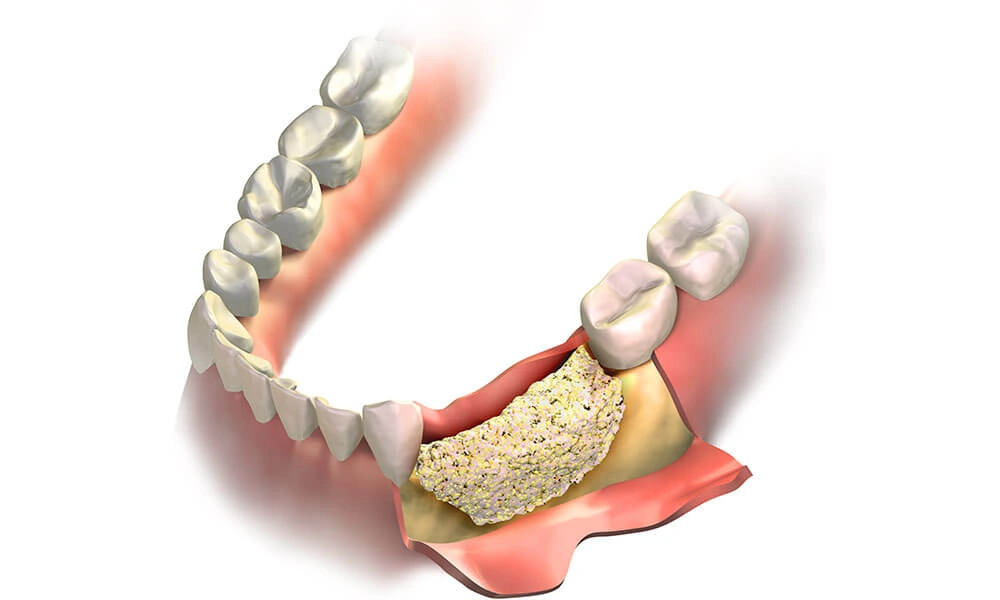
A dental bone graft is a surgical procedure that adds bone material to the areas of your jaw that have suffered bone loss. The added bone material becomes a “scaffold” that encourages your body to grow new bone naturally.
A dental bone graft is indicated when:
- There is a need to replace your dental implant
Dental implants are stable and durable only when anchored in jawbones with sufficient bone density and volume. Thus, if you are planning to replace an implant and you have suffered bone loss, your dental surgeon will recommend a bone graft to prepare the site.
- You have periodontal disease
Advanced gum disease erodes the bone supporting your teeth and makes your teeth shift and loosen. Bone grafting helps to regenerate lost bone mass.
- You’ve had one or more teeth extracted
If you’ve had a tooth removed recently, your jawbone around the site will likely resorb or shrink. For this reason, dental surgeons perform a “socket preservation” graft immediately after extracting a tooth to maintain bone volume in the area. This prevents your face from getting shrunken or having a “collapsed” appearance.
- You’ve suffered an injury to your jawbone.
Accidents or injuries to your jawbone will result in defects that would require grafting for total repair and restoration.
- You have a narrow or short jawbone
If your jawbone is so narrow or short that it cannot support the placement of implants or other restorations, your dental surgeon would suggest a ridge augmentation procedure to widen and increase the height of your jawbone.
- You require a sinus lift
If your dental surgeon determines that the sinuses in your upper jaw are too close to your jawbone where he (or she) needs to place implants, he (or she) will recommend a sinus lift procedure to raise the sinus floor and add bone material to create additional room.
Factors Weighing in on Dental Bone Graft Cost
No dental practice has a fixed dental bone graft price. Rather, the final bill you get to pay is influenced by several factors. It is important that you understand each one of these factors before you commit to the treatment.
- Type of bone graft material
This is a key determinant of what your procedure will cost. Four types of materials are available for you to choose from:
i. Autograft, which is when your bone, harvested from another part of your body like your jaw or hip, is used. Autografts offer the best success rates due to their biological compatibility, but the procedure is expensive because of the need to operate on two surgical sites.
ii. Allograft, which is when the bone to be used for the procedure is sourced from the remains of a deceased human being. The bone material thus sourced is thoroughly screened and processed to ensure safety. Allografts are less invasive and more affordable than autografts.
iii. Xenograft, which is when the bone material to be used is sourced from an animal, usually a cow. They are thoroughly screened and processed to ensure safety and compatibility, just like allografts. Xenografts are common and cost-effective.
iv. Alloplasts, which are when artificial bone graft materials are used. These artificial materials are usually made of biocompatible minerals like calcium phosphate or hydroxyapatite. Alloplasts are safe and convenient and eliminate the need to source donor tissue. They are very affordable.
- How extensive the bone loss is
Your dental bone graft cost will be less if the bone loss you have suffered is minimal and thus requires a simple procedure. On the other hand, more extensive bone loss implies that a larger quantity of graft material will be used, and that will add some extra cost.
- How complex will the procedure be
Dental bone graft procedures vary in complexity and cost. For example, a simple socket preservation is less complex and less costly than a sinus lift or a graft that takes place on multiple sites.
- The surgical approach used
The surgical approach to be utilized during the procedure weighs in on the cost. Generally, open or minimally invasive surgeries tend to cost less.
- Your geographical location
Where you are having your procedure done influences the cost. Dental practices in metropolitan areas tend to charge more for their services compared to their counterparts in rural communities. For example, a dental bone graft in New York will cost more than in Missouri. The same analogy applies to the cost of dental bone grafts in Western and Eastern Europe.
- The type of anesthesia used
Usually, local anesthesia is used for dental bone graft procedures, where only the surgical area is anesthetized. That cost will usually be included in your final bill. However, you will incur additional bills if you opt for more involved sedation, like oral or intravenous sedation, or even general anesthesia.
- Your dental surgeon’s expertise and track record
You should expect to be billed more if the dental surgeon handling your case is highly experienced and has a solid record of successful dental bone grafts.
- Diagnostic imaging is required.
Diagnostic tests are required for the precise planning of dental bone graft treatment. Some of the tests include X-rays of your jawbone and possibly 3D Cone Beam Computed Tomography (CBCT) scans. The costs of these tests will be factored into your final bill.
- Extra materials that will be used
Sometimes, the cost of the additional materials—like barrier membranes—to be used for the procedure will be added to the overall cost.
- Post-operative care
Post-operative care, which includes follow-up clinics and any medications that were prescribed, will also be factored into your final bill.
Read also: 8 Signs That You Need Dental Implants
A Breakdown of Dental Bone Graft Cost
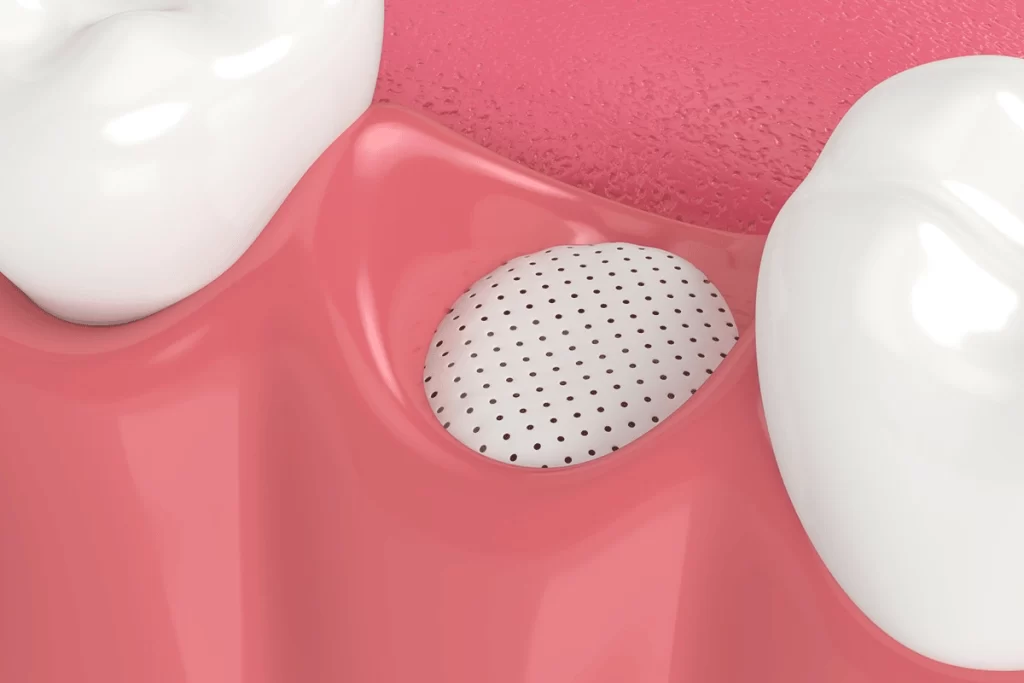
Dental bone graft costs in the United States vary widely as a result of the factors outlined above. For a single site, expect to pay between $500 and $5,000.
The estimated rates for specific graft types include
- Alloplasts (synthetic): $500 – $1,500;
- Xenografts (animal tissue): $500 – $1,800;
- Allografts (human donor tissue): $700 – $2,500;
- Autografts (your bone tissue): $1,500 – $5,500;
There are procedures and associated costs you should prepare for:
- Socket preservation (after having an extraction): $400 – $1,000;
- Ridge augmentation: $1,000 – $3,500;
- Sinus lift: $1,500 – $5,000;
Do note that these price estimates do not include the cost of the dental implant itself, which will add another $1,500 to $6,000 per implant to your bill. Also, these costs are not exact, so you should always get a detailed breakdown from your dentist.
Always Discuss Your Options With Your Dental Professional
Given that your dental bone graft cost can vary widely, it is best that you have a detailed consultation with your dentist to assess your case and arrive at a treatment plan that is perfect for you.
Ideally, your dentist should provide you with:
- A detailed treatment plan stating clearly the specific type of graft being proposed, all the materials needed, an overview of the proposed procedure, and the timeline that applies.
- A detailed, itemized breakdown of all costs, listing all fees charged, including that for the graft material, the dentist’s professional fee, anesthesia, diagnostics, including all required imaging, and post-operative care and clinics.
- Your payment options, including which part of the overall bill your dental insurance covers and how much you will be paying out of pocket. Also, it should state if there are financing plans you can access and if you can claim any discounts.
Do note that you should always seek a second and maybe a third opinion, especially if your case is complex. This will enable you to compare treatment plans and costs.
Read also: Dental Cap vs Crown: Which One Is Better for You?
Conclusion
Although the potential cost of your proposed graft will greatly influence your decision-making, the expertise of your dental professional and the quality of care are key determining factors in arriving at your choice of practice to have your procedure done.
Remember that the success or otherwise of your dental bone graft will affect subsequent dental restorations you plan to have in the future.
Lastly, that informed decision that aligns with your oral health needs and your financial situation begins by understanding every factor that influences your dental bone graft cost. That understanding comes through diligent research of your options and a detailed consultation with your dentist.