



If you’re considering a career in dentistry, you’ve likely asked yourself, “Is dental school hard?” Dentistry is a highly respected profession that demands years of intense training, testing your dedication, patience, and resilience at every turn.
As a dentist, you’ll become a guardian of oral health, playing a vital role in detecting early signs of systemic diseases.
The answer is clear: dental school is challenging, whether you’re studying in the United States or Europe. From rigorous classroom sessions to hands-on clinical training, the journey tests you intellectually, emotionally, and physically.
So, is this demanding yet rewarding path right for you? This article explores what makes dental school so rigorous, how to thrive during your studies, and why the hard work is ultimately fulfilling.
Read also: How to Become a Dental Assistant
Prerequisites and Preparation
Your journey to dental school begins with a highly competitive application process. Admission to dental schools in the United States and Europe is selective, demanding a strong academic foundation.
In the United States, most dental schools require a bachelor’s degree, often in a science field, or at least three years of undergraduate study. You’ll need a solid grounding in biology, chemistry, physics, and organic chemistry.
In Europe, requirements vary by country: the UK, for instance, requires A-levels in sciences, while Germany often mandates additional entrance exams.
You’ll also need to excel on standardized tests like the Dental Admission Test (DAT) in the U.S. or the UK Clinical Aptitude Test (UKCAT) in the UK. These exams assess your scientific knowledge, critical thinking, and problem-solving skills.
Beyond academics, dental schools expect strong letters of recommendation and a compelling personal statement. Volunteering or work experience in a dental practice can significantly strengthen your application.
Intense Academics
Expect rigorous academics once you earn a place in any dental school. Dental school lasts four years in the United States, leading to a Doctor of Dental Surgery (DDS) or Doctor of Dental Medicine (DMD) degree, while it lasts for either five or six years—depending on the country—in Europe.
The curriculum in a dental school is intense and blends classroom learning with practical, clinical work. The first two years of study feature foundational science courses like human anatomy, physiology, biochemistry, and microbiology. These courses are often taught with particular emphasis on dental-specific knowledge.
For example, it is typical for dental students to study head and neck anatomy in great detail, often memorizing every nerve, muscle, and blood vessel in both locations.
Other courses like dental histology, oral pathology, pharmacology, and dental materials science are the additional courses you will be taking.
These courses are often taught at a fast pace and in great depth. You’ll be expected to retain vast amounts of information and apply it in both theoretical and practical settings. There will be frequent quizzes, tests, and examinations.
There will be classes and clinics to attend. Time management is of great essence during your training, as you risk falling behind in your studies if you falter. The end goal of your training is your deep understanding of the human body—especially the head and the neck—and the nexus between oral and systemic health.
And this makes the answer to “Is dental school hard?” a definitive yes in the academic sense.
Intense Clinical Training
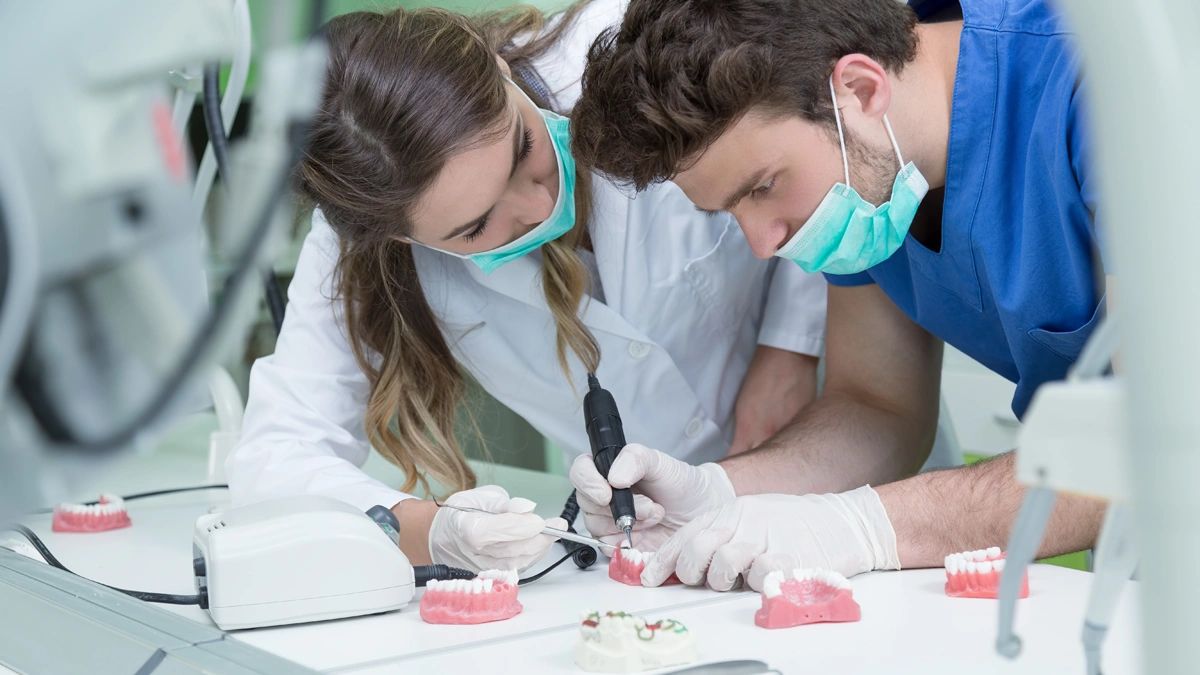
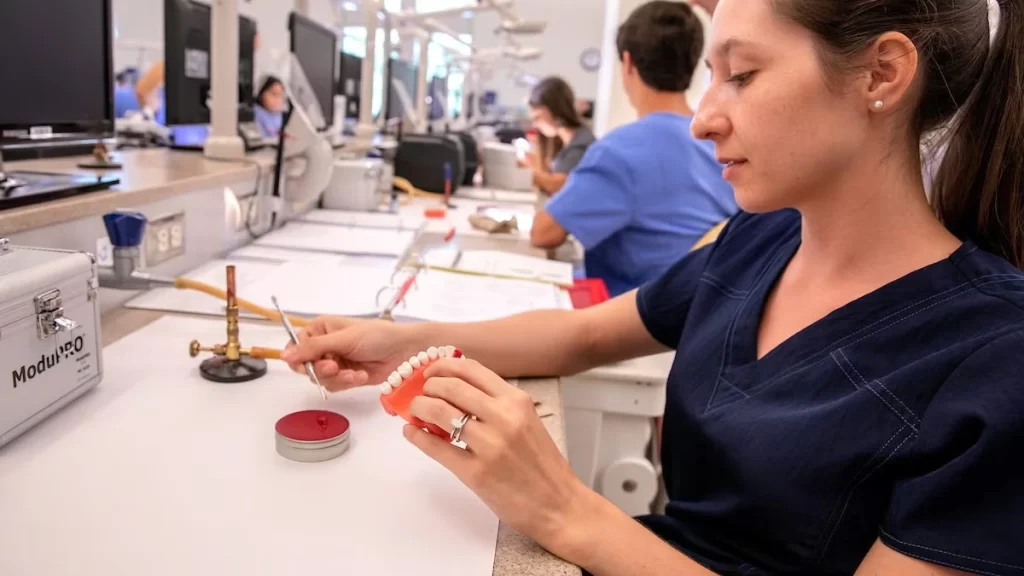
You will be transitioned into preclinical labs by the beginning of your third year in dental school. It is at this point that you will begin applying your head knowledge to solving real dental problems.
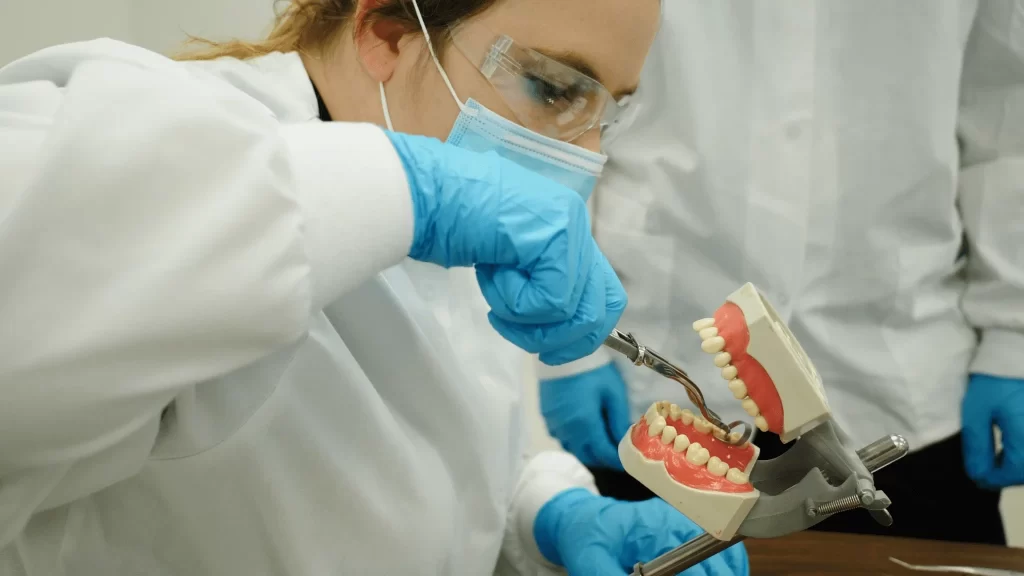
At first, you will be required to carry out procedures like cavity preparation, fillings, extractions, crown placement, and root canals on mannequins. These procedures will test your precision, hand-eye coordination, and patience. You learn to be able to be calm under pressure, as a single slip could result in grievous harm to a patient.
Once your professor is convinced of your mastery of the basics, you will transition into supervised clinical rotations. Here, you will be treating real-life patients’ dental problems under the supervision of your professor or other experienced clinical staff.
Additional learning in such areas as patient communication—to manage and keep patients’ anxieties in check—will take place during your clinical rotations. Beyond your head and hand knowledge, your professional demeanor is important, so you will be learning how to comport yourself as a dentist during your clinical rotations.
At the end of your clinical training, you should have demonstrated competence and confidence in performing a variety of procedures before going on to graduate as a dental doctor.
Read also: How Much Does a Dental Hygienist Make?
Emotional and Financial Stress
Dental school will inflict an emotional and financial toll on you. For instance, you are expected to master your theoretical and practical knowledge while managing anxiety-prone patients who present with often-difficult cases, all under intense time pressure.
A slight mistake can be crushing, especially if it negatively impacts your patient or your grades. In addition, the constant assessment—practical exams, written tests, or clinical evaluations—creates a high-stress environment.
Building up your resilience and having a proven methodology for coping will be essential to your success. Beyond that, most dental schools have student counseling services you can fall back on from time to time.
Financially, attending dental school is no walk in the park. Tuition ranges from US$40,000 to US$80,000 annually in the United States.
Tuition in dental schools in Europe is in a similar range. This does not include living expenses, which add to the cost of training. Most dentists graduate with as much as US$300,000 outstanding in student loans.
Most students resort to working part-time as they study or seek scholarships or grants as a way of alleviating the financial burden of getting trained.
Work-life Imbalance
Attending dental school will often create a work-life imbalance that you must be prepared to deal with. Your typical daily routine will be long and activity-filled.
At a minimum, there will be classroom lectures and labs from 8:00 am to 5:00 pm weekdays, along with several clinical rotations during the week. In addition, there will be several hours spent studying late into the night or early in the morning, plus possible weekend lab practice or case reviews.
Burnout is an ever-present risk in this fast-paced environment, but time management skills as well as top-notch mental and physical health will help you beat it.
A rewarding career
The rewards of training as a dentist are commensurate with the rigour and sacrifice the training demands. For instance, dentistry is a well-respected and rewarding career, offering annual salaries of as much as US$165,000. Dentists in Europe are also paid in the same range.
Also, being able to restore patient health, confidence, and quality of life makes dentistry a fulfilling career for most.
Moreover, there are rewarding specializations in dentistry for the driven. These include orthodontics, oral surgery, and pediatric dentistry.
Each specialization requires more training and offers even more recognition and rewards after training. Board-certified dentists work in public health, in private practice, in academia, or in research.
Nevertheless, is dental school hard enough to make people quit? Unfortunately, dental students drop out midway through dental school or change careers. But for those who persist, the rewards more than make it a worthwhile endeavor.
Here’s How to Succeed in Dental School
Preparing well is the secret to succeeding in your studies while attending dental school.
- Be organized
There’s a lot you need to do in so few waking hours. Organize yourself around “to-do” lists that feature your daily tasks ranked in order of importance. Examples are pending assignments or scheduled study tasks. There are planners or apps you can use to organize yourself in dental school.
- Be excellent in time management
Time management is a critical skill that will make or break you in dental school. Prioritize your tasks and ensure that you create time for your social life and sleep. Don’t fall behind in your studies.
- Study in a group
Find like-minded peers you can study alongside from time to time. Studying in a group creates opportunities for collaboration and makes dental school less isolating. Also, have mentors and counselors you can go to when needed to help you stay focused and motivated.
- Take care of yourself
Exercise routinely every day, eat balanced meals, and get enough sleep at night. Have a healthy hobby—like watching movies or reading novels—you can indulge in when your stress level is high.
- Don’t falter when you fail
Failing—for example, in a test or a clinical assessment—is part of the learning process. Don’t let any setback you encounter in your training get to you. Rather, gather your wits around you and keep your training going.
Read also: How Long Does a Dental Cleaning Take?
Conclusion
So, is dental school hard? The short answer is “yes.” Dental school training is intellectually, emotionally, financially, and physically taxing. It takes years of intentional dedication, sacrifice, and resilience. But the result is a rewarding and impactful career in healthcare.
No matter where you are applying from, knowing the “lay of the land” will help you to prepare mentally before securing a place in dental school and to persevere with your studies when you encounter headwinds.