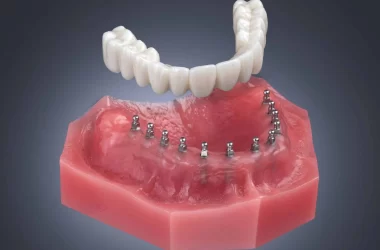





Dental implants are the choice solution for many seniors in the United States with missing teeth. They are durable and look like natural teeth. However, most seniors rely on Medicare for their healthcare needs, including dental care. This prompts many a senior to ask, “Does Medicare cover dental implants?”
The question is appropriate given that dental implants are big-ticket procedures. Moreover, traditional Medicare offers limited coverage for dental implants, which it regards as cosmetic.
This article seeks to examine Medicare’s coverage of dental implants in great detail and provide an answer to the question.
Read also: What Does Medicaid Cover for Dental for Adults?
An Overview of Medicare
Medicare is a federal health insurance scheme in the United States for individuals who are at least 65 years of age. Also, the scheme includes younger individuals who have certain disabilities or medical conditions.
Medicare is made up of several parts: Part A (hospital insurance), Part B (medical insurance), Part C (Medicare Advantage, offered by private companies), and Part D (prescription drug coverage).
Medicare considers dental implants—the surgical fusion of artificial tooth roots into the jawbone to support replacement teeth or bridges—to be a dental and not a medical service. This limits the coverage seniors subscribed to Medicare have when they need dental services.
A study of the Medicare and Medicaid Act (1965) suggests that Original Medicare—Parts A and B—does not provide general cover for dental implants. This aligns with Medicare’s historical exclusion of almost all dental services.
However, there are exceptional circumstances under which Medicare will provide coverage for particular dental services.
The exceptions are few and all are tied to medical necessity, never routine dental care.
Dental Services Covered By Medicare Parts A and B
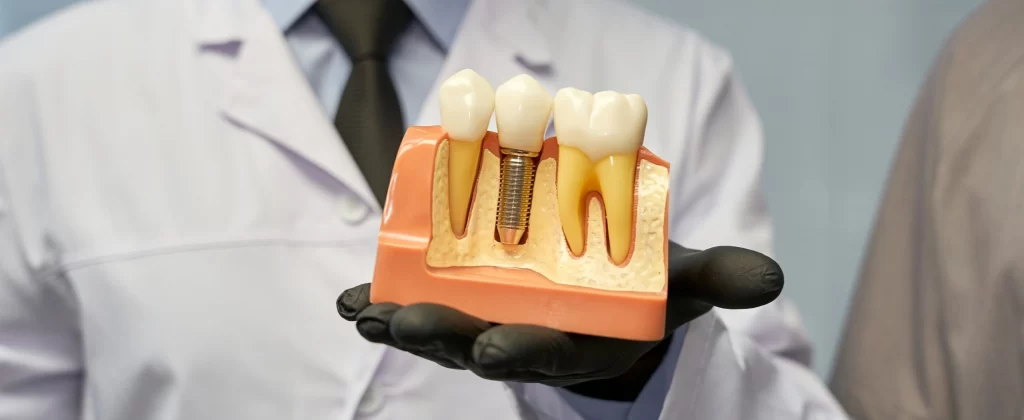
As stated previously, Medicare covers most dental services only if they are linked to the successful clinical success of other procedures or services covered by Medicare.
Generally, Medicare might provide coverage for dental services if they are a part of an inpatient stay resulting from an underlying medical condition covered by Medicare. Typical scenarios include:
- An oral examination and resulting dental treatments before a heart valve replacement, or a bone marrow, organ, or kidney transplant.
- Tooth extractions that are part of a treatment regimen for mouth infection resulting from cancer, before having chemotherapy.
- Treatment for dental complications that are a fallout of head and neck cancer treatment.
Beyond providing limited coverage for dental services, does Medicare cover dental implants? The answer is “no” for most scenarios, although there are specific exceptions:
- Inpatient hospitalizations:
Medicare Part A might cover some costs for a dental implant that is part of the procedure for treating a patient who requires hospitalization. An example is if a patient who has suffered a jaw injury after a car accident requires dental implants to restore mouth function.
- Medical necessity:
Medicare will provide some coverage if a proposed dental implant is deemed a medical necessity for the success of another covered treatment. An example is when a patient undergoing head and neck cancer treatment requires dental implants to restore oral aesthetics and function.
- End-Stage Renal Disease:
Medicare provides broad coverage for patients who have end-stage renal disease and are undergoing dialysis. This coverage might include dental exams and maybe implants under exceptional situations.
These exceptions highlight the limited coverage Medicare Parts A and B provide for dental implants.
Read also: How to Get Dental Implants Covered by Medical Insurance
Dental Services Covered By Medicare Part C
Does Medicare cover dental implants through Medicare Advantage plans (Part C)? There is just a glimmer of hope there.
Medicare Advantage plans are health insurance offerings by private companies. By law, these offerings must cover all services offered by Medicare Parts A and B, and can include additional benefits like dental services and implants.
Most Medicare Advantage plans cover preventive dental services like annual cleanings and X-rays, as well as restorative services like filling of cavities and root canals. Only a few provide partial coverage for dental implants under exceptional circumstances.
The evidence suggests that most Medicare Advantage plans will cover dental implants only if it is a medical necessity. Medicare Advantage subscribers will do well to review their plan’s dental benefits to determine if implants are covered and under what conditions.
For example, is prior authorization required? Is there a limit to costs covered or the number of implants accessed?
Alternative Coverage Options for Dental Implants

Dental implants are a pricey yet necessary option for most seniors. A single dental implant, which includes abutment and crown, costs anything from US$3,000 to US$4,500 according to Humana. The cost goes up to US$6,000 to US$10,000 for multiple teeth, while a full-mouth replacement costs as much as US$90,000.
The minimum cost for attaching an implant body is about US$1,500.
These high costs, coupled with Medicare’s lack of coverage, make it especially challenging for seniors with fixed incomes to have dental implants. This necessitates the need to explore other options:
- Private Dental Insurance
Several private insurance companies offer dental plans that provide partial coverage for dental implants. Private insurance will often come with annual maximums and wait periods before coverage begins.
- Dental Discount Plans
This is another helpful option that seniors requiring dental implants can explore. Dental discount plans are all about reduced dental service offerings at practices that offer them. While they might not cover the entire cost of the procedure, they help reduce out-of-pocket dental care expenses.
- State Programs:
Some states have programs in place that cover dental care for low-income seniors. Examples are California’s Medi-Cal Dental Program (Denti-Cal) and Colorado’s Dental Health Care Program for Low-Income Seniors.
- Medicaid:
Medicaid is another avenue through which low-income seniors can afford dental implants. Specifically, some states can offer coverage for dentures and implants through the official Medicaid program.
- Veteran Affairs (VA):
Veterans with service-related disabilities may be eligible for dental care, including implants, through the Veterans Affairs program.
Read also: Does Blue Cross Medical Insurance Cover Dental Implants?
Conclusion
The answer to the question, “Does Medicare cover dental implants?” is a general “no.” Only in very rare cases do Medicare subscribers get to enjoy limited coverage for their dental implant needs.
Given the high cost (US$3,000–US$4,500 per tooth) of dental implants, seniors need to develop a knack for understanding local healthcare systems and insurance options in planning for dental care.
Some controversy persists around Medicare’s limited coverage of dental services and implants. Advocates are pushing for the inclusion of dental services and implants under Original Medicare. They argue that oral health is part and parcel of overall health, and excluding dental implants worsens the well-being of seniors.
The advocacy has produced recent changes in Medicare payment policies for specific dental services, but they are minuscule and benefit only a few.