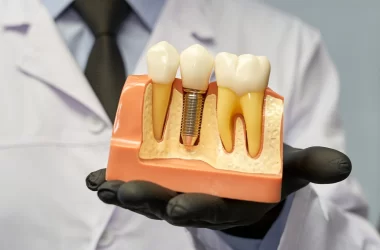





Dental crowns are useful for treating missing teeth. They restore the sturdiness and beauty of the teeth in the mouth. They could be used to cap a decayed or fractured tooth, in root canal treatments, or to top off a dental implant.
Although dental crowns are beneficial, there are disadvantages of dental crowns that everyone considering this treatment ought to be aware of. Understanding their disadvantages will help in informing decisions and in preparing for the procedure.
What is a Dental Crown?
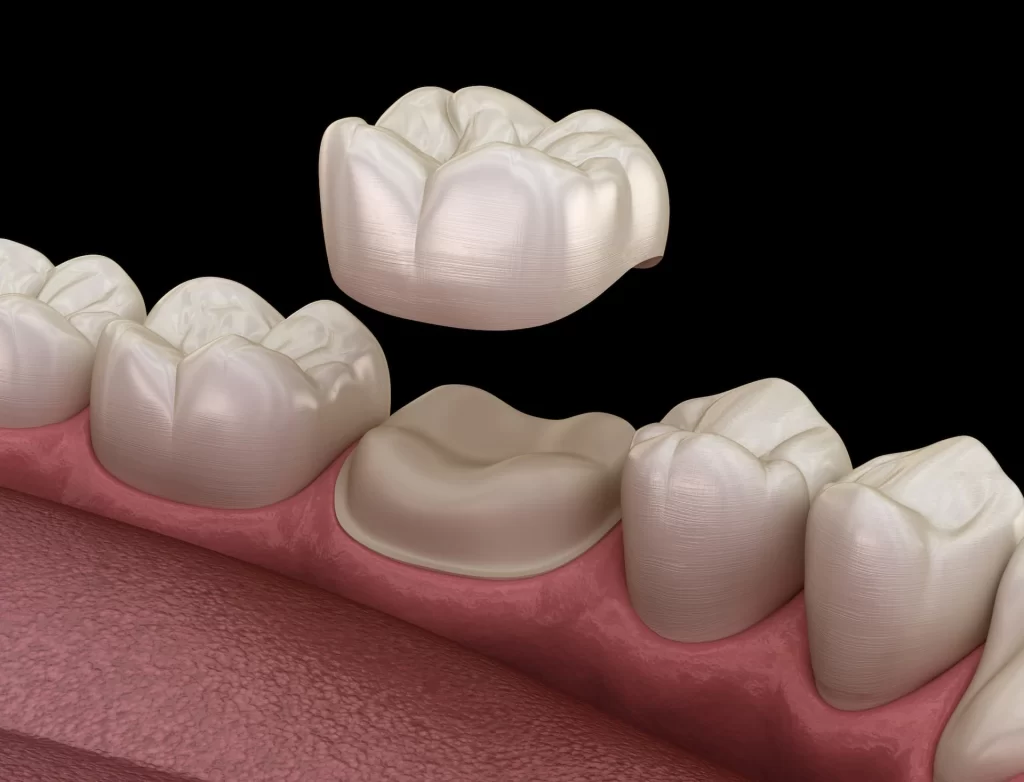
A dental crown is a cap shaped like a tooth. It fits snugly over the tooth like a hat. Dentists use dental crowns to restore weak or broken teeth or to cap dental implants. They are also used to cap teeth that have undergone a root canal treatment.
Dental crowns are made from several types of materials, which include metal, resin, porcelain, and ceramic, and they are durable for as long as fifteen years if they are properly cared for.
Read also: Dental Cap vs Crown: Which One Is Better for You?
Disadvantages of Dental Crowns
The following are some of the disadvantages of dental crowns:
- Possible Tooth Damage
If a tooth has to be capped with a crown, then some filing of the healthy, surrounding teeth needs to be done to create room for the crown. Inadvertently, healthy parts of the surrounding teeth being filed will be lost during the irreversible process.
Also, the enamel—the hard, outer layer of the tooth—has to be filed away. The resulting tooth is forever altered, as the process cannot be undone.
Lastly, there is the risk of damage to the tooth’s pulp while grinding down the tooth or the enamel. The pulp is the soft core of the tooth that houses the nerves and the blood vessels. The tooth becomes sensitive if it loses its protective layer and its core gets exposed. It might even lead to the need for a root canal.
- Nerve Damage
It happens quite often that a tooth’s nerve gets exposed or irritated while prepping it to receive a crown.
An exposed tooth nerve is easily irritated, makes the tooth sensitive at all times, and is prone to infections. It is impossible to live with it. Hence, it necessitates the need for a root canal. A root canal removes the damaged nerve and pulp from the tooth’s core, cleans and disinfects it, then fills and seals it.
- Tooth Sensitivity and Discomfort
Tooth sensitivity shows up as a sharp pain when there is pressure, for example, from chewing on the tooth or when it comes in contact with hot or cold foods and drinks. An extremely thin enamel is the cause, as it exposes the tooth’s dentin tubules to irritation.
Bite discomfort is another disadvantage of wearing dental crowns. Sometimes the crown might be set too high up in the teeth, leading to a queasy feeling when biting on or chewing food.
- Crown Failure
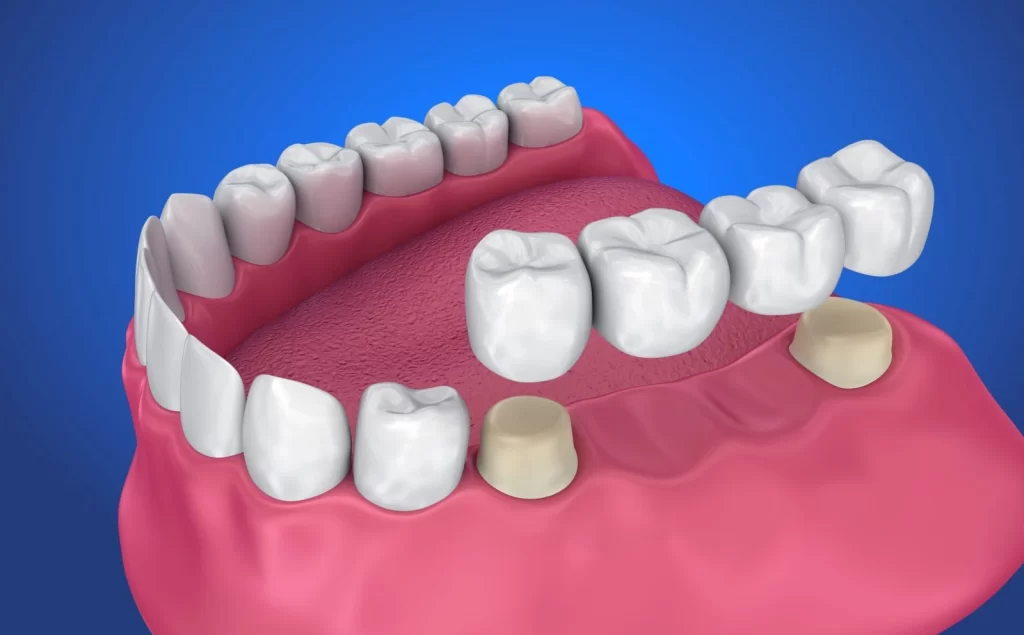
Dental crowns do fail in spite of the expertise and technology that goes into installing them.
They might loosen or begin to wobble; maybe even slide off mid-speech. Sometimes, it’s the cement that glues them in place that fails. When a dental crown fails and detaches, another visit to the dentist—with all the time and tedium involved—is indicated.
There’s also the risk of infection when a crown fails. The space between the failed crown and the tooth might start harboring bacteria, especially when there is poor oral hygiene. The infection can cause the decay of otherwise healthy teeth if left to fester.
Read also: Types, Cost, and Uses of Dental Implant Crown
- Aesthetic Fails
Dental crowns are not just about how well they function; how they look in the mouth is also important! This is not surprising, as many people get a dental makeover to have a smile they can be proud of. So, what kind of aesthetic failures can happen with dental crowns?
There could be a color mismatch between the crown and that of the surrounding natural teeth. The color of natural teeth changes over time through aging or as they come in contact with food or drinks, while that of the crown stays the same.
This mismatch takes away from the beauty of the smile and will lead to self-consciousness and lower self-esteem. Regular check-ins with the dentist for cleanings will help alleviate this concern.
Closely related is the possibility of a dark line appearing at the gum. This is true for the porcelain-fused-to-metal crown, whose metal base begins to show as a dark line as the wearer’s gum recedes.
Added to that is the possibility of part or the whole of the crown chipping and falling away. This happens especially with all-ceramic or all-porcelain crowns. They could chip away at their edges if they are used to biting down on something hard, like brisket bones.
A good way to prevent this is to do away with hard, crunchy foods. Also, the teeth should not be used as a tool, for example, to open a corked bottle of wine.
- Potential Gum Irritation and Infection
A crown being fitted on a tooth or an implant needs to be placed with meticulous care. Ideally, the crown’s margin or base should rest easily exactly on the gum line. If it extends into the gum line, it will potentially irritate the gum tissue and cause issues like the inflammation of the gums or bleeding (gingivitis).
On the other hand, if the crown does not sit perfectly on the gum line, the gap underneath is perfect for retaining food particles and housing bacteria. The tooth becomes difficult to clean properly, and a secondary decay becomes a possibility.
- Cost Considerations
Having a dental crown installed is costly. The material the crown is made of, the laboratory fee for its customization, as well as the expertise of the attending dental surgeon all add to the cost of installing it.
Furthermore, dental insurance might not be helpful because it always provides very limited coverage for dental procedures.
Cost can be a barrier for some individuals and will prompt them to seek less expensive and less durable options to treat their tooth loss.
- The Inconvenience Of Several Visits to the Dentist
The crowning process entails making several visits to the dentist, which is an inconvenience for most individuals. There are at least three, maybe four, visits required to have a crown fitted.
There is the initial visit during which the comprehensive oral examination and diagnostic imaging take place. A second visit is usually for prepping the tooth, having its impression taken for custom-fabricating the crown it would receive, and having it crowned temporarily.
A third visit takes place a couple of weeks later, for the removal of the temporary crown and the cementing in place of the custom-made crown. A fourth visit might be necessary for needed adjustments or repairs.
A few dental practices offer same-day crowning using CAD/CAM technology, but this option is not yet widely available.
Read also: All-on-4 Dental Implants Price in 2025
Conclusion
Dental crowns offer several benefits, including the restoration and protection of lost or compromised teeth. Nevertheless, they come with potential disadvantages. Individuals intending to have dental crowns placed need to be fully aware of these potential disadvantages of dental crowns.
It could be the irreversible nature of any alteration made to the tooth or damage to the tooth itself, leading to nerve damage, sensitivity, and gum disease. Or maybe aesthetic mismatches that happen so often. All of these factors are important, as they determine the overall patient experience when having a crowning.
A detailed discussion with the dentist about crowning needs, the pros and cons, as well as alternative treatments available, is a good first step for individuals considering having a crown installed.