



For most people who have lost a tooth, a dental implant is the long-term, natural-looking replacement that restores the look, feel, and function of the lost tooth. At the heart of the dental implant is the implant crown, the part of the implant that is visible to the human eye and which has the look, feel, and strength of a real tooth.
The dental implant crown is the aesthetically pleasing solution for tooth loss. This article provides detailed information about the types, cost, and uses of dental implant crowns.
What is a Dental Implant Crown?
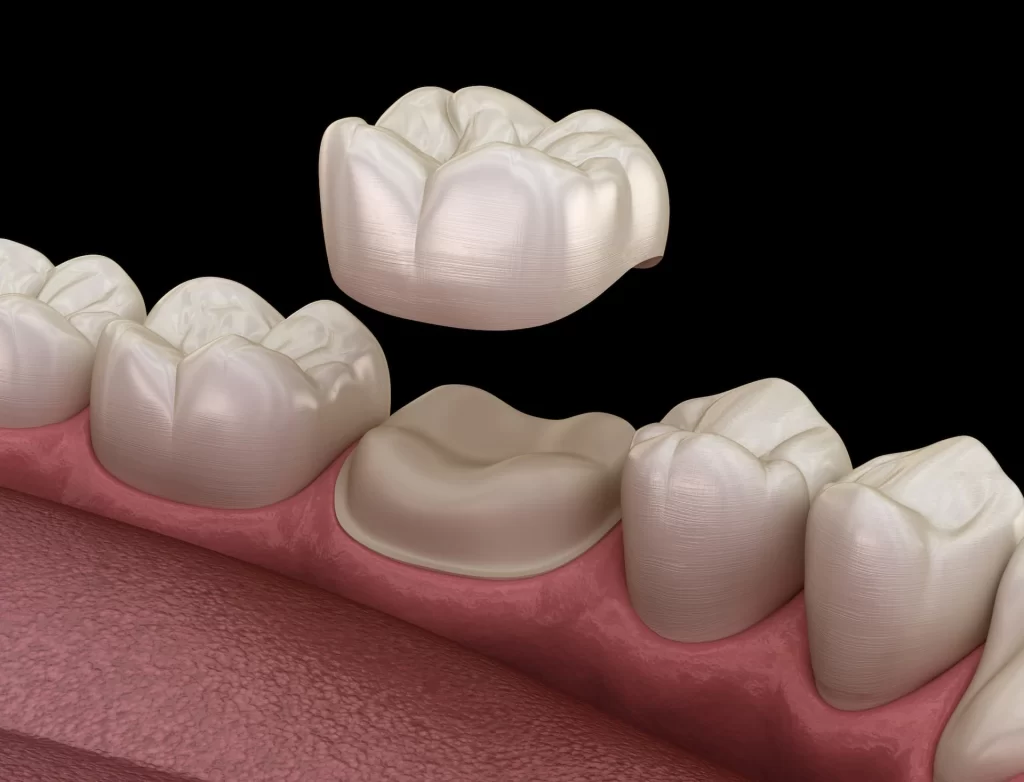
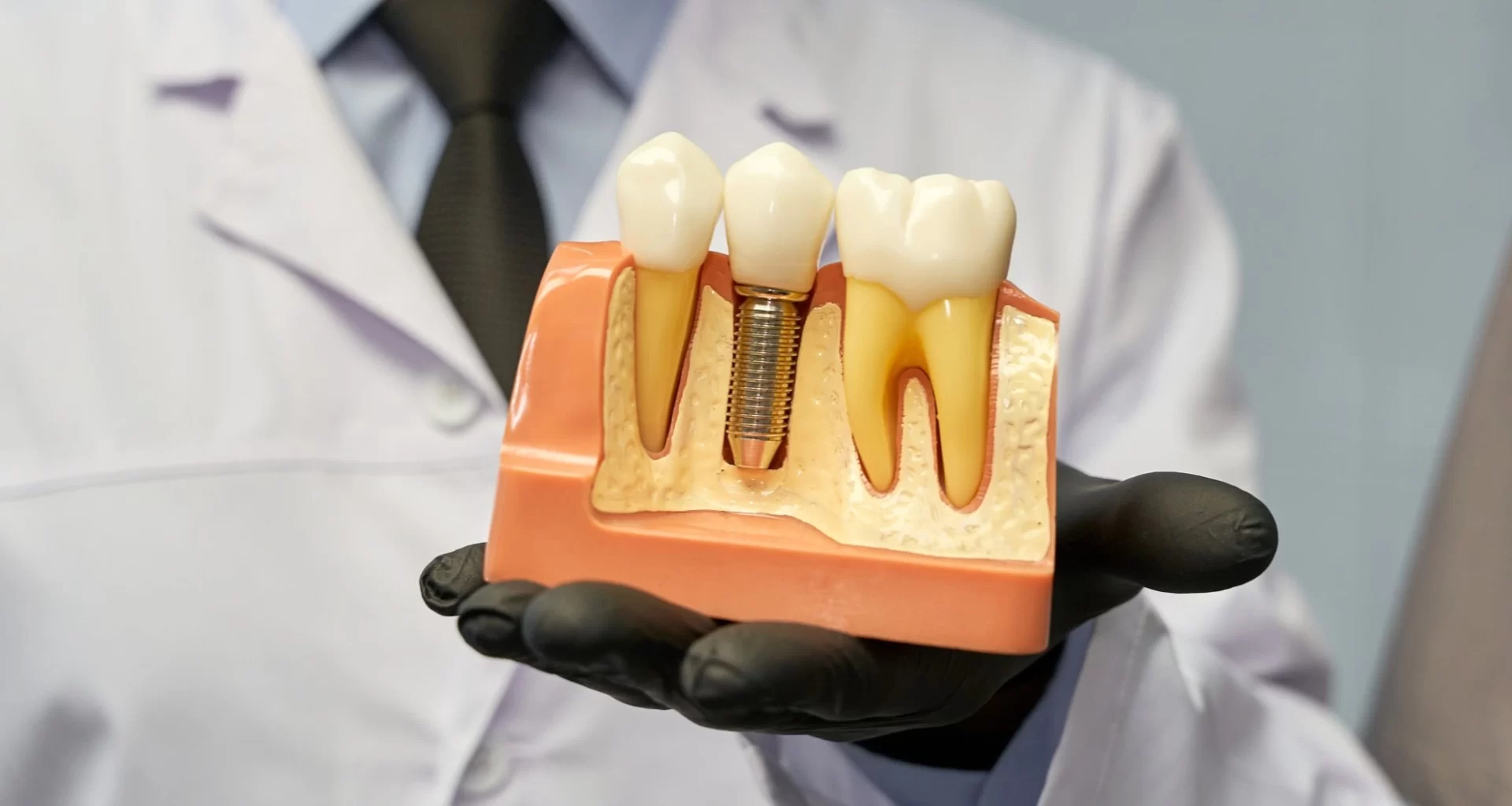
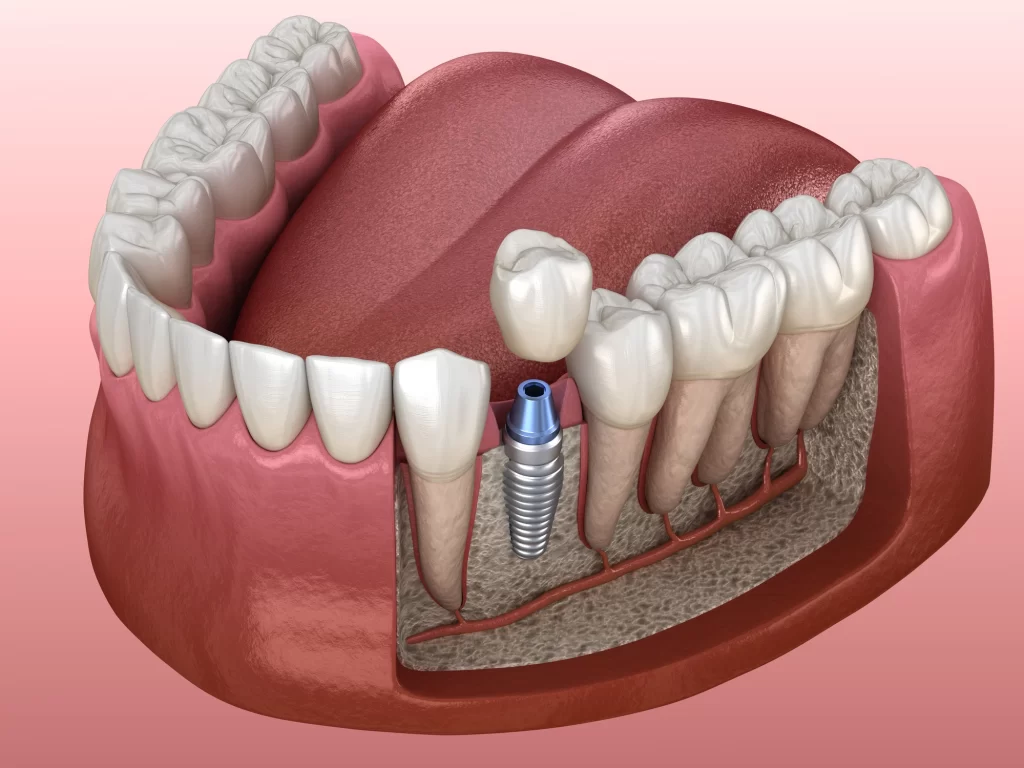
A dental implant crown is the prosthetic tooth attached to the top of the dental implant. The dental implant itself is a medical device comprised of three distinct parts:
- The implant fixture – which is the titanium post that is surgically screwed into the jawbone and around which the jawbone fuses over time through osseointegration. It acts as the “anchor” for a prosthetic tooth or other denture.
- The abutment – which is the connector between the implant and the prosthetic tooth or denture.
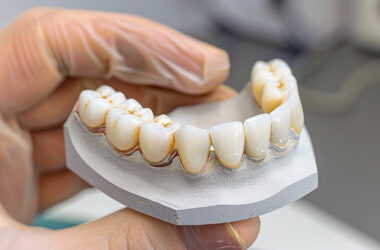
- The crown, which is the prosthetic tooth or “tooth-shaped” cap that sits on top of and is connected to (with the abutment) the dental implant. Crowns are always customized to match the shape, size, and color of the recipient’s surrounding teeth. Done right, they are a fully functional replacement for lost teeth.
This three-part system is stable and durable, thus making dental implants a treatment of choice for many patients.
Read also: Dental Cap vs Crown: Which One Is Better for You?
Types of Dental Implant Crowns
There are several types of dental implant crowns, classified according to the material they are made of:
- Porcelain-Fused-to-Metal (PFM) Crowns
These crowns have a metal core and a porcelain outer covering. They are strong and durable because of their metal core. Also, they look good to the eye because they are made to match the color of natural teeth. They are resistant to staining and very affordable.
- All-Ceramic or All-Porcelain Crowns
These crowns are made entirely of ceramic materials. They are natural-looking and completely free of any metal core. They don’t wear or chip easily, which makes them an excellent choice for replacing lost front teeth.
- Zirconia Crowns
These crowns are also made of ceramic but are stronger, more durable, and biocompatible. They are free of any metal core and are excellent alternatives to PFM crowns. They hardly cause any allergies and are commonly used to replace lost back teeth that are used for biting.
- Gold Crowns
Gold crowns are a distinct type of metal crown. They are entirely made of pure or alloyed gold. They are durable and biocompatible. However, they are rarely used nowadays for aesthetic reasons. Gold crowns don’t chip or break; hence, they are perfect for long-lasting dental restoration.
Each type of crown has its disadvantages. For example, the PFM crown often shows its metal base as a dark line through the gum line over time or as the gum recedes.
All-Ceramic or All-Porcelain crowns are notorious for being brittle, while Zirconia Crowns are known to wear down opposite teeth and look less natural in the dental arch. Finally, gold crowns are less pleasing to the eye and prone to sharp temperature changes because of gold’s conductive nature.
Crowns can further be classified according to the type of attachment used to fix them to the implant:
- Screw-Retained Crowns – in which the crown is screwed on to the implant. These types of crowns allow for easy access to the abutment when repairs or maintenance are required.
- Cement-Retained Crowns – in which the crown is cemented into the implant. It is the more aesthetic approach, although it makes it difficult to access the implant when repairs are needed.
Cost of Dental Implant Crowns
Dental implant crown costs vary significantly. The typical crown costs anything from US$1,000 to US$3,000. This is the cost of the crown itself, which is one of many line items that would make up the total bill for any proposed implant.
The dental implant could cost as much as US$3,000 to US$6,000 per tooth replaced. Again, this cost varies due to several factors:
- Type of Crown Material
This greatly influences the price. For example, All-Ceramic and Zirconia crowns cost more because of their superior aesthetics and durability compared to PFM crowns.
- Location
Dental procedures cost more in metropolitan areas when compared to rural ones. For example, dental practices in New York or Los Angeles will charge higher for implants than their contemporaries in South Dakota or Kentucky.
- The Experience and Specialization of the Dentist
Highly experienced dentists who have specialized in one or more areas of implant dentistry will often charge higher fees. The premium is a reflection of their extensive training, specialized equipment, and proven track record.
- Diagnostic Imaging
A dental implant is carefully planned through the use of diagnostic imaging. There would be a comprehensive oral examination, X-rays taken of the surgical site, and probably some 3D cone-beam computed tomography (CBCT) scans. These will add a few hundred dollars to the final bill.
- Preparatory procedures
In cases where the jawbone is deemed not fit and proper to carry an intended implant, some preparatory procedures will be done on the patient. Some of them are tooth extractions to remove damaged teeth (US$75 to US$650 each), bone grafting to increase the bone density of the jawbone (US$200 to US$3,000), sinus lifts to increase the space between the sinus cavity and the jawbone for upper jaw implants (US$1,500 to US$2,500), and gum grafting, which seeks to thicken the gum around the site of the proposed transplant.
- Number of implants
The cost of having crowns implanted naturally increases as the number required increases. For example, a full arch replacement utilizing the All-on-4 technique and requiring a full fixed bridge and multiple implants can cost as much as US$30,000.
- Anesthesia and Sedation
Typically, local anesthesia is included in the base bill for a dental crown transplant. However, if more advanced sedation, like intravenous (IV) sedation or general anesthesia, is required, it will increase the cost of having the procedure.
- Laboratory fees
Usually, a dental laboratory fabricates the customized implant to be used for a procedure. Thus, the laboratory fee—which depends on the technology used and the complexity of the crown’s design—is an added cost.
- Insurance coverage
The presence or absence of insurance coverage for dental procedures also impacts the cost of dental crowns. Most insurance plans provide part-coverage only for the abutment and crown, while direct coverage for the implant surgery itself is limited at best or non-existent. Plus, there are annual limits ($1,000 to $2,000) on the extent of coverage provided, which might not even cover the cost of the procedure.
Read also: 5 Cheap, Best Alternatives to Dental Implants
Uses of the Dental Implant Crown
The dental implant crown solves several dental issues requiring tooth replacement because of its versatility and effectiveness. The following are the several uses to which the dental implant crown is put:
- Single Tooth Replacement
Crowns are used in cases where a single tooth is lost due to decay, trauma, or gum disease. A single implant is placed, followed by a crown on top. The approach eliminates the need to grind down adjacent teeth to make room for a bridge, thus preserving the patient’s natural tooth structure.
- Multiple Teeth Replacement
When several adjacent teeth are missing, an implant-supported bridge is required. Two or more implants are positioned in the jawbone, and a bridge made up of several crowns is attached to the implants. It is stable, long-lasting, and eliminates the need to depend on adjacent natural teeth to support more traditional bridges or removable dentures.
- Support for Full Arch Replacements
Crowns are used in full arch restorations. When a patient has lost some or all of the teeth in an arch, a well-placed All-on-4 or All-on-6 implant will adequately support a full arch on non-removable bridges and dentures. This dramatically improves chewing, speaking, and overall oral health.
- Enhancing Facial Looks by Preventing Bone Loss
Crowns preserve facial structure by preventing bone loss in the jaw. The area surrounding the site of a tooth loss begins to resorb or shrink over time. Implants in the affected jawbone prevent this by mimicking the roots of natural teeth and keeping it stimulated. Thus, the “sunken-in” appearance of the face that would have resulted is eliminated.
- Improving Oral Function and Comfort
Removable dentures slip, click, or cause sore spots, while dental implants fuse permanently into the jaw. Thus, crowns affixed to implants are stable and comfortable for chewing. They allow wearers to enjoy meals without worrying. In addition, wearers will enjoy improved clarity in speech, as there is no moving device in their mouths interfering with the sounds they produce.
Taking Care of Dental Crowns
The care for dental crowns follows the same routine as that for natural teeth:
- Brushing of the teeth morning and night with a non-abrasive toothpaste.
- Flossing carefully after meals.
- Checking in regularly with the dentist for cleanings.
- Avoiding chewing on hard objects, like brisket bones, that could damage the crown.
Read also: 8 Signs That You Need Dental Implants
Conclusion
Dental implant crowns are durable, functional, and affordable replacements for missing teeth. Their long-term benefits—including bone preservation and a natural look—often make up for the cost of having them.
Always confer with a qualified specialist dentist to explore your options if you are considering having them.